
Momos, the iconic steamed dumplings from Tibet and Nepal, have become a beloved dish across Asia and India. Traditionally steamed and filled with meat or vegetables, momos have evolved into versatile vegetarian adaptations suitable for modern dietary preferences. Among these, Tandoori Veg Momos with Sauce stand out for their smoky flavor, slightly crispy texture, and rich, tangy accompaniment.
Tandoori preparation infuses momos with a roasted, smoky aroma, while the sauce adds moisture, zest, and depth, making them a perfect appetizer, snack, or meal. This article presents a 9-step guide to making Tandoori Veg Momos, covering ingredient selection, preparation techniques, cooking methods, nutritional insights, and cultural significance.
1. Cultural and Culinary Context

Momos trace their origins to Tibet, where they were traditionally prepared with yak meat and barley flour dough. As they spread across Nepal, Bhutan, and northern India, the dish was adapted to vegetarian diets, particularly in regions with strong vegetarian traditions.
Tandoori Veg Momos exemplify the fusion of Himalayan techniques with Indian tandoori flavors, highlighting culinary innovation while respecting tradition. Roasting momos in a tandoor or oven introduces a smoky, charred flavor that contrasts with the tender vegetable filling, creating a sensory-rich experience. The accompanying sauce enhances taste and presentation, aligning with contemporary culinary trends.
2. Ingredients for Tandoori Veg Momos with Sauce

To prepare approximately 20 medium-sized momos, gather the following ingredients:
For the Dough:
- All-purpose flour – 2 cups
- Salt – ½ teaspoon
- Water – ~½ cup (adjust as needed)
- Oil – 1 teaspoon (optional, for softer dough)
For the Vegetable Filling:

- Finely chopped cabbage – 1 cup
- Grated carrots – ½ cup
- Finely chopped capsicum – ½ cup
- Finely chopped onions – ½ cup
- Minced garlic – 1 tablespoon
- Grated ginger – 1 tablespoon
- Soy sauce – 1 teaspoon (optional)
- Salt – to taste
- Black pepper – ½ teaspoon
- Oil – 1 tablespoon (optional for sautéing)
For Tandoori Marinade:
- Yogurt – 2 tablespoons
- Tandoori masala – 1 teaspoon
- Red chili powder – ½ teaspoon
- Lemon juice – 1 teaspoon
- Salt – to taste
For Sauce:
- Tomato ketchup – 3 tablespoons
- Red chili sauce – 1 tablespoon
- Lemon juice – 1 teaspoon
- Fresh coriander – 1 teaspoon, chopped
3. Step One – Preparing the Dough
The dough forms the base for soft and pliable momos. Proper texture is essential for shaping and tandoori cooking.
- Combine all-purpose flour and salt in a mixing bowl.
- Gradually add water, kneading continuously to form a smooth, elastic dough.
- Add oil if desired to improve softness.
- Cover the dough with a damp cloth and rest for 20–30 minutes.
Resting the dough allows gluten to develop, making it easier to roll thin wrappers without tearing.
4. Step Two – Preparing the Vegetable Filling

The filling provides flavor, texture, and nutritional value.
- Heat 1 tablespoon of oil in a pan over medium heat.
- Sauté garlic and ginger until aromatic.
- Add onions, cooking until translucent.
- Stir in cabbage, carrots, and capsicum, sautéing for 3–4 minutes.
- Season with soy sauce, salt, and black pepper.
- Remove from heat and allow the mixture to cool completely.
Cooling ensures that the filling does not make the dough soggy and facilitates easier shaping.
5. Step Three – Rolling the Wrappers
Uniform wrappers are critical for even cooking and presentation.
- Divide the rested dough into small balls (~1 inch each).
- Roll each ball into a thin circle of approximately 3 inches in diameter, keeping edges slightly thinner than the center.
- Cover rolled wrappers with a damp cloth to prevent drying.
Even rolling ensures consistent cooking and a tender bite.
6. Step Four – Shaping the Momos
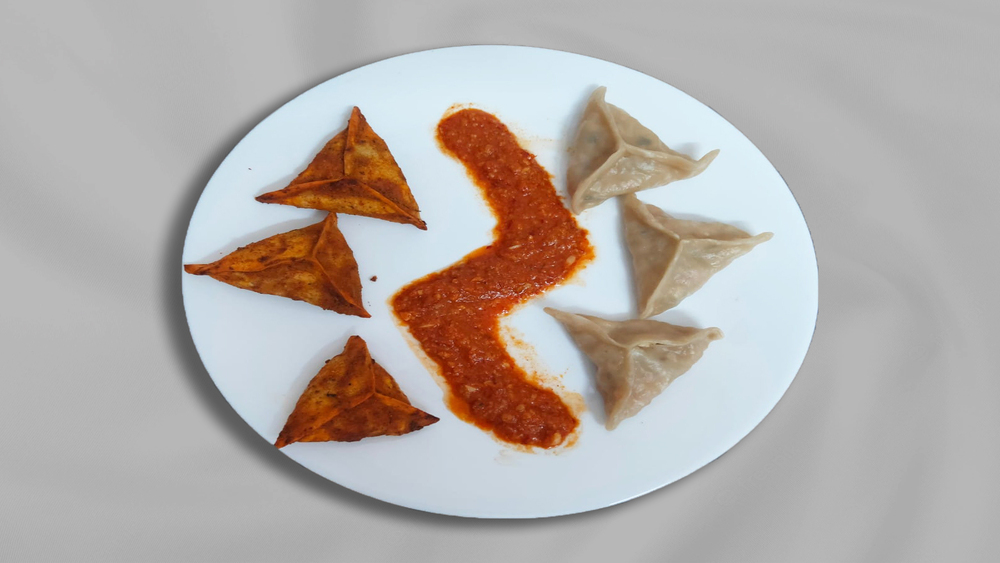
Proper shaping ensures that the momos are well-sealed and cook evenly.
- Place a wrapper on your palm.
- Spoon 1 tablespoon of cooled vegetable filling in the center.
- Fold and pleat edges, pinching tightly to seal.
- Use a simple half-moon or round pouch shape for ease.
Well-shaped momos prevent leakage during steaming or tandoori roasting.
7. Step Five – Steaming the Momos
Steaming partially cooks the momos, ensuring that the dough is soft and the filling is cooked evenly.
- Lightly grease a steamer tray to prevent sticking.
- Arrange momos with space between each.
- Boil water in the steamer base.
- Cover and steam for 8–10 minutes on medium heat.
Steaming ensures a tender base before roasting in tandoori or oven.
8. Step Six – Marinating for Tandoori Flavor
Marination infuses the momos with smoky, spiced flavors characteristic of tandoori dishes.
- In a bowl, mix yogurt, tandoori masala, red chili powder, lemon juice, and salt.
- Lightly coat steamed momos with the marinade using a brush or spoon.
- Allow marinated momos to rest for 10–15 minutes to absorb flavors.
This step enhances aroma, taste, and visual appeal when cooked.
9. Step Seven – Tandoori Roasting
Tandoori roasting introduces smoky flavor and a slight crisp to the momos.
- Preheat a tandoor, oven, or air fryer to 180–200°C (350–400°F).
- Place marinated momos on a tray lined with parchment paper or a lightly greased baking sheet.
- Roast for 8–10 minutes, turning halfway for even cooking.
- Momos are ready when slightly charred and aromatic.
Tandoori roasting adds texture while preserving the soft interior and vegetable nutrition.
10. Step Eight – Preparing the Sauce
The sauce complements the smoky, spiced momos with tanginess and moisture.
- In a small bowl, combine tomato ketchup, red chili sauce, lemon juice, and chopped coriander.
- Mix thoroughly and adjust seasoning as needed.
- Serve the sauce warm or at room temperature alongside the tandoori momos.
The sauce balances flavors and adds a visual pop, enhancing overall presentation.
11. Step Nine – Plating and Serving
Presentation enhances both taste and appeal.
- Arrange roasted momos on a serving platter.
- Drizzle or serve with prepared sauce.
- Garnish with fresh coriander or sesame seeds if desired.
Tandoori Veg Momos with Sauce can be served as an appetizer, snack, or light meal. Pair with a light salad or green tea for a wholesome dining experience.
Nutritional Benefits
Tandoori Veg Momos with Sauce are light, nutritious, and satisfying. A serving of 4–5 momos provides:
- Calories: 180–200 kcal
- Carbohydrates: 25–28 g
- Protein: 4–5 g
- Fat: 3–5 g
- Fiber: 3–4 g
Vegetables supply vitamins, minerals, and antioxidants. Yogurt in the marinade adds probiotics and calcium, while minimal oil preserves the low-fat profile. Steaming before roasting ensures nutrient retention, making this dish both delicious and healthful.
Cultural and Culinary Significance
Tandoori Veg Momos with Sauce exemplify culinary fusion, combining traditional Himalayan cooking techniques with Indian tandoori flavors. This adaptation demonstrates how classic dishes evolve to suit contemporary tastes while maintaining cultural authenticity.
Vegetarian momos are widely popular in urban India and Nepal, consumed both as street food and in homes. The tandoori method adds an innovative twist while respecting the essence of the traditional momo, making it appealing to modern diners seeking flavor, texture, and nutrition.
Conclusion
The 9-Step Guide to Tandoori Veg Momos with Sauce illustrates the harmony of tradition, innovation, nutrition, and flavor. From kneading the dough to steaming, marinating, tandoori roasting, and serving with tangy sauce, each step emphasizes simplicity, healthfulness, and culinary satisfaction.
These momos are perfect for home cooks, beginner chefs, or anyone seeking a light, flavorful, and visually appealing vegetarian dish. They demonstrate that traditional Himalayan cuisine can adapt to modern tastes while remaining wholesome and culturally authentic.
With tender, smoky momos and a tangy sauce, this recipe transforms simple vegetables into a delightful culinary experience, suitable for dinners, parties, or casual gatherings.