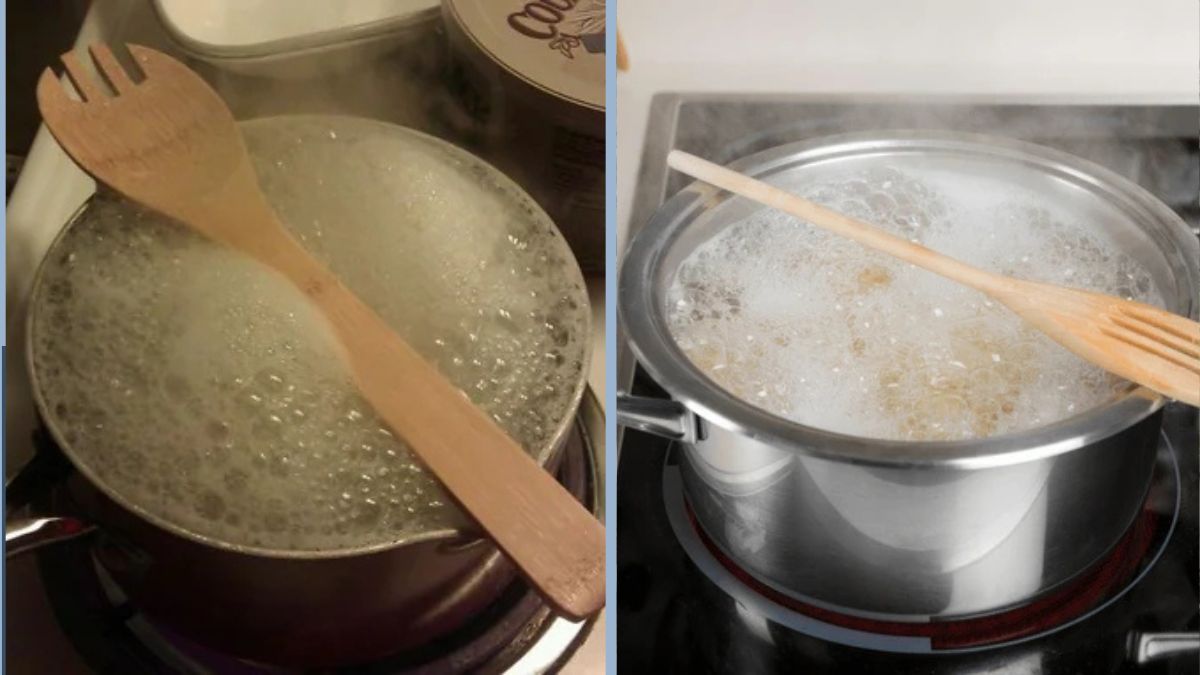
If you’ve ever stood over a pot of pasta or soup, anxiously watching as it threatens to erupt like a mini volcano, you know the frustration of boil-overs. One second, everything’s fine — the next, bubbling foam spills over the edge, hissing on the stove, leaving you with a sticky mess to scrub later.
For years, I tried every trick in the book to prevent it: lowering the heat, removing the lid, even stirring constantly. But inevitably, the pot would bubble over the moment I turned my back.
Then I discovered a simple, almost magical kitchen hack: laying a wooden spoon across the top of the pot.
It sounded absurdly easy — too easy. But after trying it, I was completely converted. Somehow, that humble wooden spoon managed to stop my pot from boiling over again.
Here’s what happened, why it works, and how this centuries-old cooking trick can save you from ever scrubbing another starchy stove spill again.
The Frustration of Boil-Overs
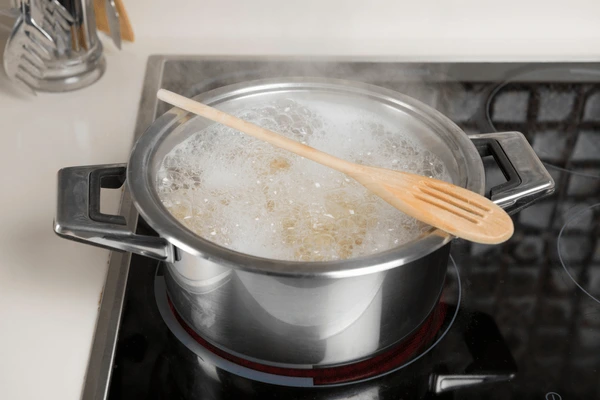
Cooking pasta, potatoes, or rice should be simple, right? Boil water, toss in your ingredients, and wait. But once the water hits that critical point, starchy foam forms and bubbles rise quickly.
Before you know it, your pot is overflowing, and your kitchen smells faintly of burnt starch.
Boil-overs are more than just messy — they waste food, cause uneven cooking, and can even be dangerous if you’re using gas burners.
I used to babysit my pots like a hawk, spoon in hand, ready to stir whenever the foam climbed too high. It was tedious, and I’d still get the occasional overflow the second I glanced away.
So when I first heard about the wooden spoon trick, I was skeptical. How could a stick of wood possibly prevent boiling water from spilling over?
The Hack: One Wooden Spoon, Endless Calm
One night, I was making spaghetti — my usual midweek comfort food — and remembered the hack I’d seen online:
“Lay a wooden spoon across the top of your pot to stop it from boiling over.”
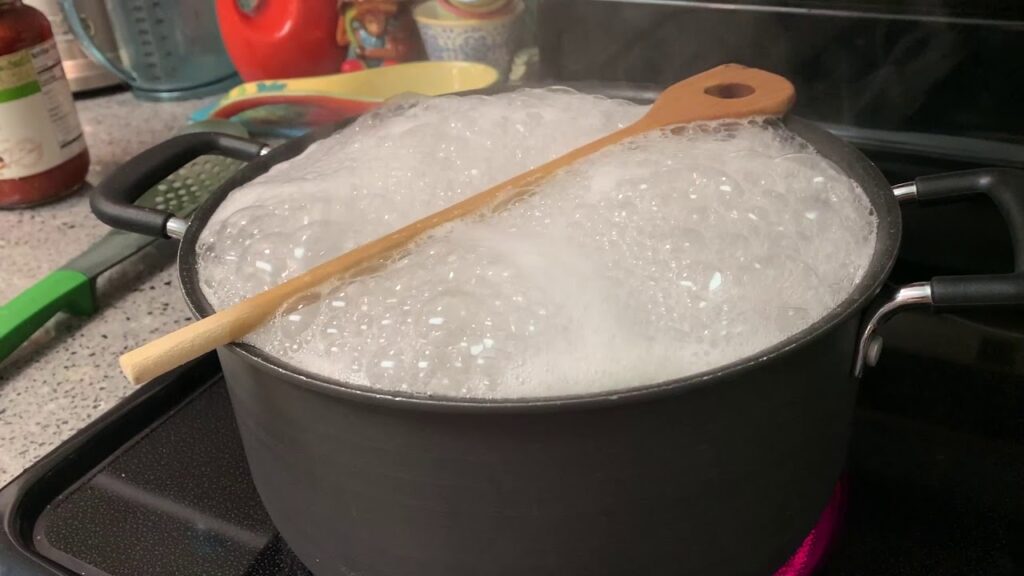
It seemed harmless to try, so I grabbed my favorite long wooden spoon (the one with a few battle scars from years of stirring soups) and balanced it across the pot.
Then I turned up the heat and waited.
At first, the bubbles climbed as usual, frothing and growing larger. I braced myself for the spill… but when the foam reached the spoon, something strange happened — it stopped climbing.
The bubbles swelled, touched the wooden spoon, and instantly popped or retreated back into the pot.
And just like that, the surface stayed calm.
No mess. No panic. No frantic stirring.
Just a gently simmering pot doing its thing — all thanks to a simple wooden spoon.
Why It Works: The Science Behind the Trick
The wooden spoon trick isn’t magic — it’s science. And it’s surprisingly fascinating once you understand what’s happening.
1. The Wooden Spoon Pops the Bubbles
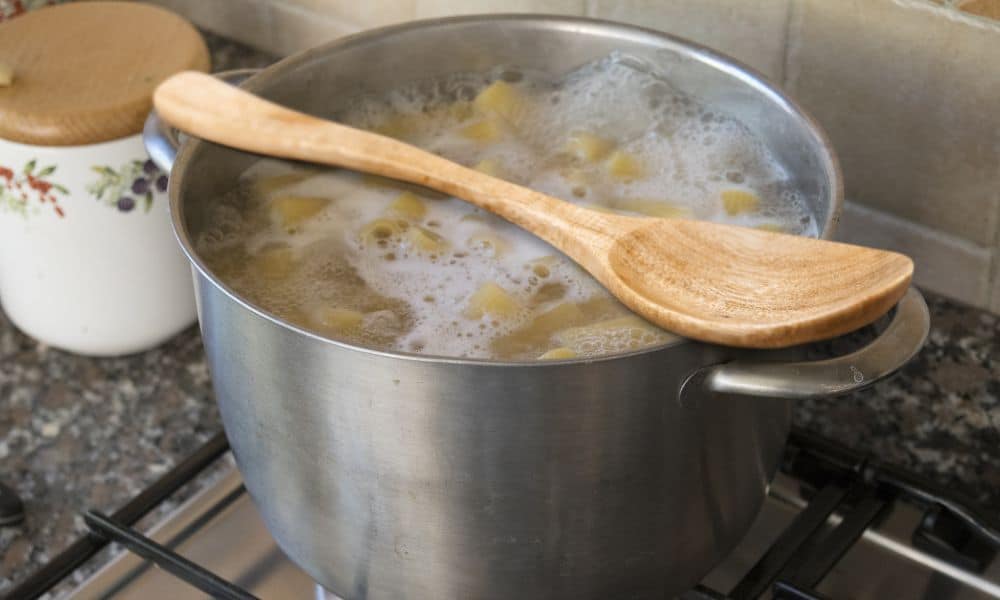
When water boils, it produces steam bubbles that rise to the surface. Starchy foods like pasta or potatoes release extra starch into the water, thickening it and making the bubbles more stable — that’s why they form that frothy foam.
As the bubbles expand, they cling together and rise until they spill over the edge of the pot.
But when those bubbles touch a dry wooden spoon, the spoon breaks their surface tension, popping them instantly.
Think of it as a little foam destroyer — the spoon provides a surface where the bubbles can’t hold their shape, so they burst before overflowing.
2. Wood Absorbs Moisture
Wood is naturally porous. When steam hits the wooden spoon, the dry wood absorbs a bit of the moisture from the foam. That slightly cool, dry surface helps destabilize the bubbles even more.
This doesn’t work as well with metal or plastic spoons because they heat up quickly or don’t absorb moisture.
3. Temperature Difference
A dry wooden spoon stays cooler than the steam and foam underneath it. When the hot bubbles touch the cooler surface, they briefly lose energy and collapse. It’s a simple temperature contrast that helps keep everything under control.
The Key: It Only Works for a While
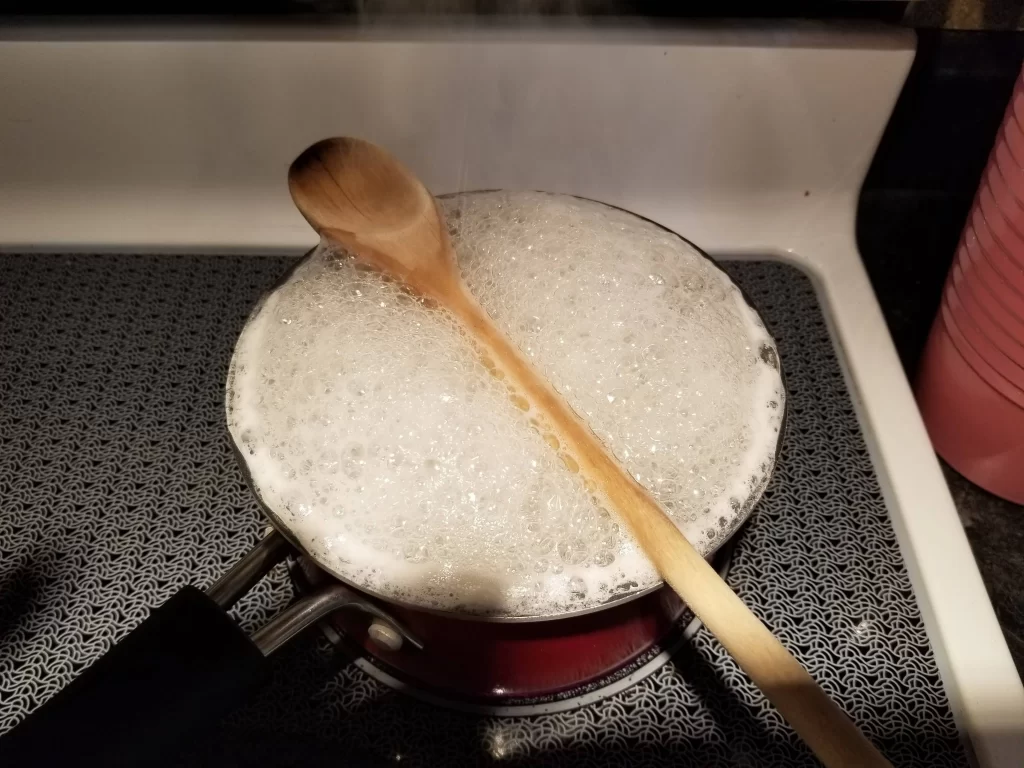
Now, before you crown your wooden spoon a kitchen miracle, it’s worth noting — this trick only works up to a point.
If you leave the pot boiling rapidly for too long, eventually, the spoon will heat up and absorb enough steam that it loses its dryness. Once that happens, its ability to pop bubbles decreases, and your pot may start boiling over again.
So, while the spoon gives you a handy buffer (and can prevent a sudden mess while you’re multitasking), it’s still smart to lower the heat once your water reaches a rolling boil.
In other words, the spoon is your first line of defense, not a total get-out-of-jail-free card.
How to Use the Wooden Spoon Trick the Right Way
If you want to get the most out of this hack, here’s how to do it properly:
✅ 1. Use a Dry, Wooden Spoon
Make sure your spoon is clean and dry before laying it across the pot. A wet spoon won’t absorb steam or pop bubbles effectively.
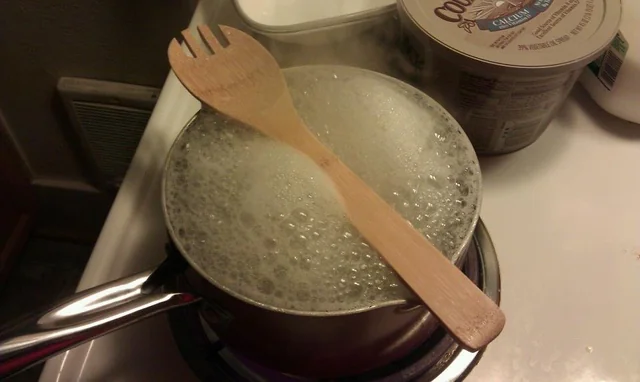
✅ 2. Lay It Horizontally Across the Top
Rest the spoon across the diameter of the pot, so it sits just above the bubbling water. Don’t submerge it — the magic happens at the top.
✅ 3. Keep the Heat in Check
Once the water reaches a full boil, turn the heat down slightly. The spoon will help during the transition from simmer to boil, but you don’t need your burner cranked up the whole time.
✅ 4. Works Best With Starchy Foods
This trick is most useful when cooking foods that cause foaming — pasta, rice, potatoes, lentils, etc. If you’re just boiling water for tea, you won’t see much difference.
A Few Bonus Tricks to Prevent Boil-Overs
While the wooden spoon is the star of the show, there are a few other techniques that can work together to make boil-overs a thing of the past.
🍝 Add a Splash of Oil or Butter
Adding a teaspoon of oil or butter to the water reduces surface tension and prevents bubbles from forming tall, stable foam.
🔥 Use a Larger Pot
Give your food more room to boil. A bigger pot with higher walls leaves more space for bubbles to rise and pop naturally before spilling over.
⏲️ Don’t Overfill the Pot
Leave at least an inch or two of space between the water level and the rim. Even with the spoon trick, if your pot is filled to the brim, overflow is inevitable.
🥄 Use a Wooden Spoon — Not Metal
Metal spoons heat up quickly and don’t absorb moisture. They can actually make the problem worse by transferring heat back into the foam. Stick with wood or bamboo.
Why This Trick Has Stood the Test of Time
The wooden spoon hack isn’t new. In fact, it’s one of those old-fashioned kitchen secrets that’s been passed down for generations.
Before non-stick pots, fancy timers, and induction cooktops, home cooks relied on practical tricks like this one — simple physics and observation rather than high-tech solutions.
It’s one of those small, clever habits that connects us to the wisdom of past generations. It works not because it’s trendy, but because it’s stood the test of time.
My Kitchen Is Calmer Now
Since I started using this trick, my kitchen feels… calmer.
No more sudden sprints across the room when I hear bubbling foam hiss. No more wiping down starchy messes from my stovetop.
It’s such a tiny change, but it makes cooking so much more relaxing. I can actually step away from the pot for a moment to chop veggies or stir sauce without worrying that I’ll return to chaos.
Final Thoughts
Sometimes, the simplest solutions really are the best.
A wooden spoon — something you probably already have in your kitchen — can stop boil-overs, prevent messes, and make your cooking experience smoother and more stress-free.
Here’s the recap:
- Use a clean, dry wooden spoon.
- Lay it across the top of your pot as the water heats.
- Watch as bubbles stop before spilling over.
- Reduce heat slightly once boiling begins.
That’s it. No special gadgets, no secret ingredients, just a bit of old-fashioned kitchen wisdom that really works.
So next time you’re boiling pasta, potatoes, or soup, grab your trusty wooden spoon and lay it across the pot. You’ll be amazed at how such a simple little stick can turn a chaotic kitchen moment into calm, controlled cooking.
It’s a reminder that sometimes, the smartest hacks are the ones that have been hiding in plain sight — right there in your utensil drawer all along. 🍲