
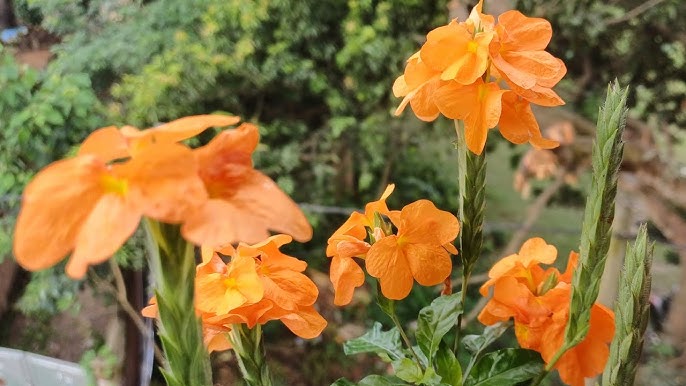
Crossandra, commonly known as the “Firecracker Flower,” is a tropical beauty cherished for its vibrant orange or yellow blooms and lush green foliage. Known for its long-lasting flowers and compact growth, Crossandra is perfect for gardens, balconies, and indoor spaces. If you are looking for a low-maintenance yet stunning flowering plant, Crossandra is an excellent choice. In this guide, we will cover everything you need to know about growing Crossandra, including planting, care tips, and maintenance for continuous blooming.
1. Introduction to Crossandra Plant
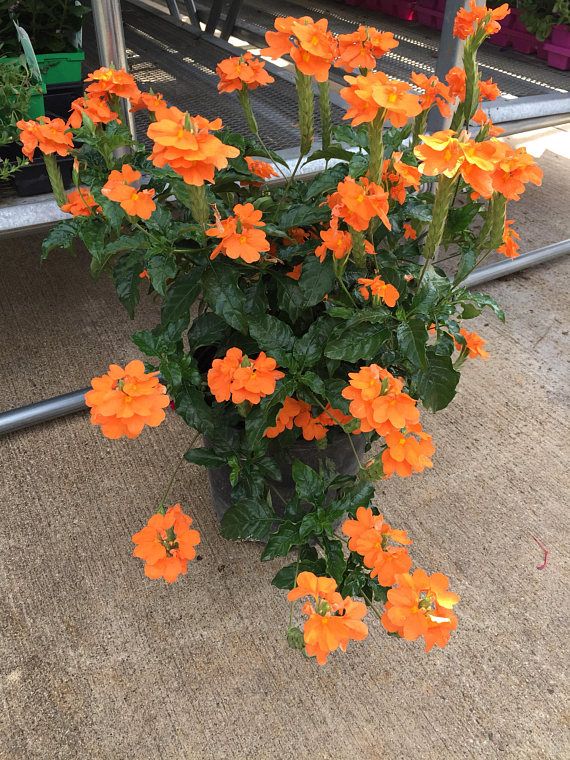
Crossandra (Crossandra infundibuliformis) is a tropical shrub native to South India and Sri Lanka. Its bright orange flowers bloom almost year-round in warm climates, making it a favorite among gardeners. Crossandra is also known for its compact size, usually growing 1–3 feet tall, which makes it suitable for both pots and garden beds. Its flowers are often used in garlands and decorations due to their durability.
The plant is low-maintenance, drought-tolerant once established, and highly attractive to pollinators like butterflies and bees. With proper care, a Crossandra plant can provide a continuous display of vibrant flowers, making your garden or home visually stunning.
2. Choosing the Right Location
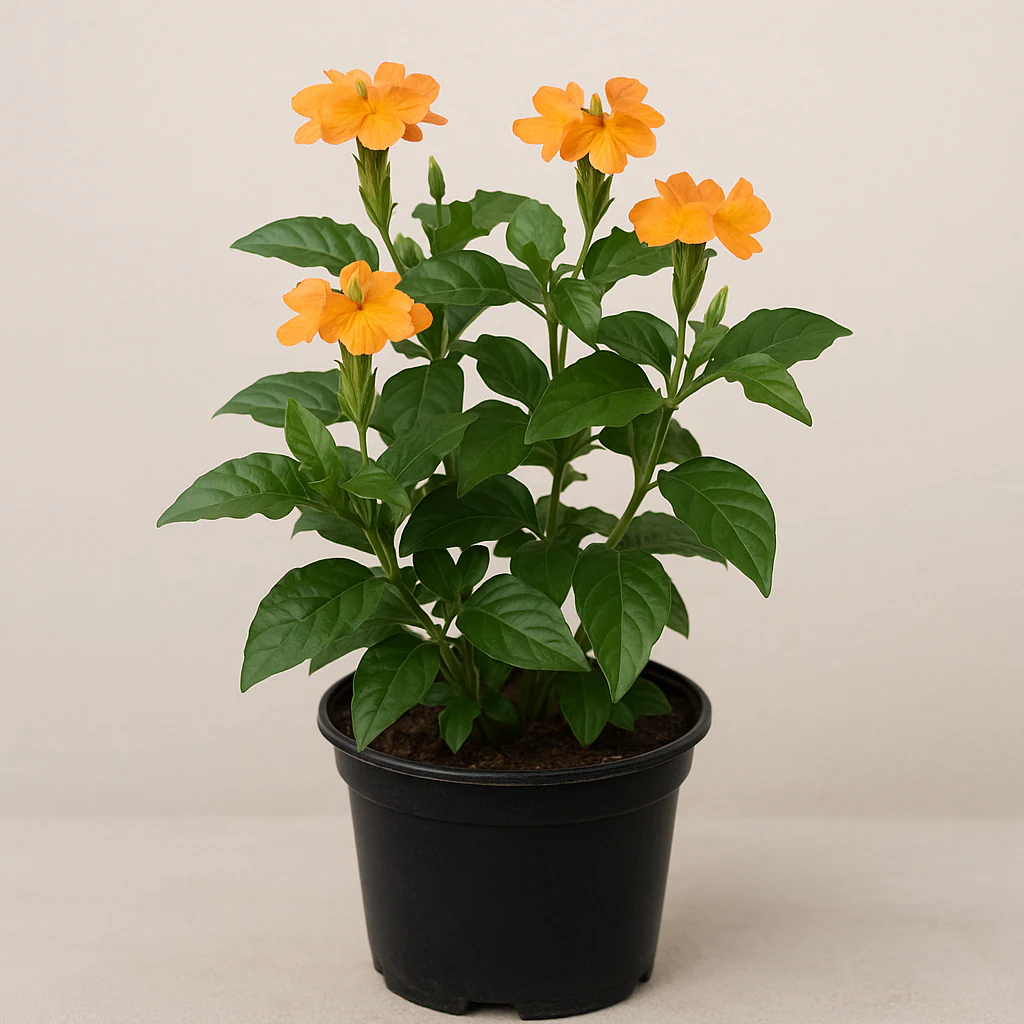
Crossandra thrives in bright, indirect sunlight. While it can tolerate partial shade, optimal flowering occurs in locations that receive 4–6 hours of sunlight daily. Avoid placing the plant in deep shade, as this reduces the number of blooms and slows growth.
For indoor planting, position the plant near a bright window with filtered sunlight. In outdoor gardens, ensure that the plant is sheltered from strong winds, which can damage delicate flowers.
Soil Requirements:
Crossandra prefers well-drained, fertile soil. A mix of garden soil, compost, and sand works well. The soil should retain some moisture but never remain soggy, as excess water can cause root rot. A slightly acidic to neutral pH (6.0–7.0) is ideal for healthy growth.
3. Planting Crossandra
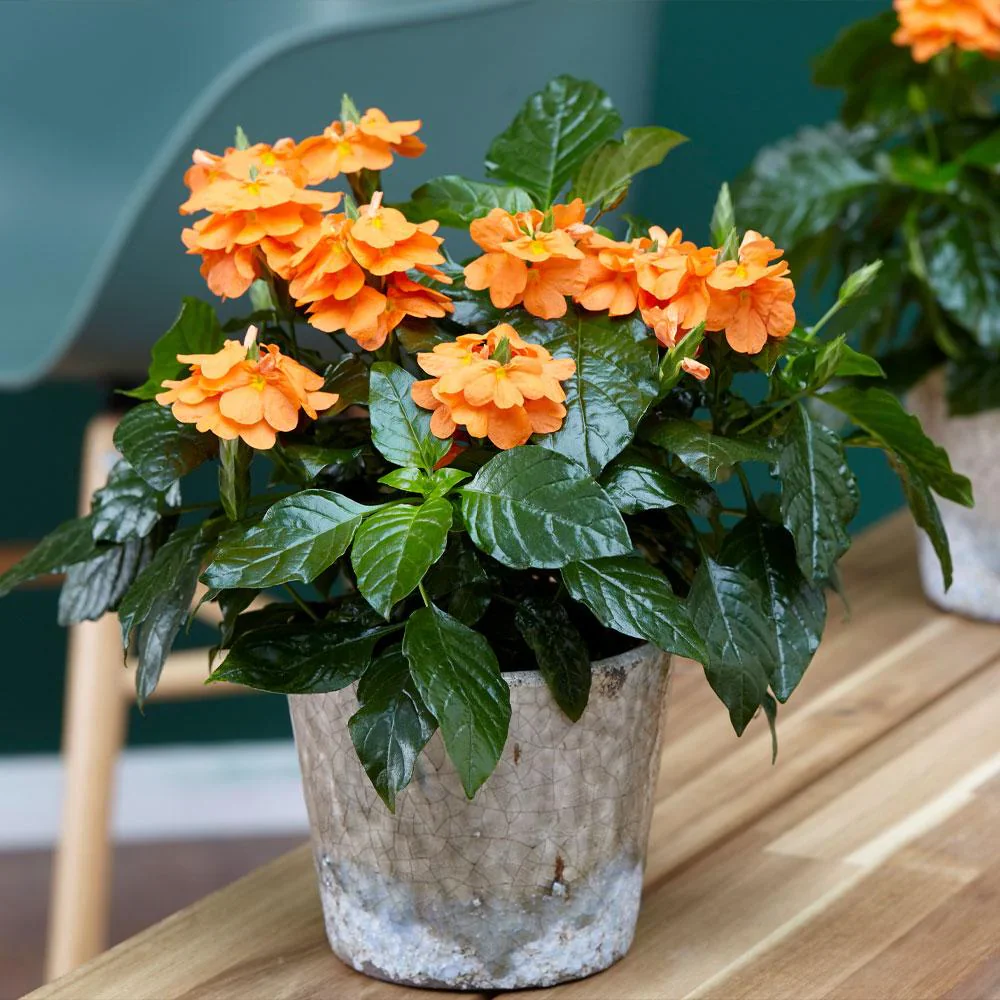
Whether planting in a garden bed or a pot, proper planting is crucial for the healthy growth of Crossandra:
Garden Planting:
- Dig a hole slightly larger than the root ball.
- Loosen the roots gently and place the plant in the hole.
- Fill with soil, water thoroughly, and apply a layer of mulch to retain moisture.
Potting Crossandra:
- Choose a medium-sized pot with drainage holes.
- Use a nutrient-rich potting mix with compost.
- Ensure the pot is placed in a location with bright, indirect sunlight.
Spacing:
If planting multiple Crossandra plants outdoors, maintain a distance of 12–18 inches between plants to allow proper air circulation and reduce the risk of fungal diseases.
4. Watering Requirements
Crossandra requires regular watering, especially during the growing season.
- Water the plant 2–3 times a week in summer or during hot, dry periods.
- Reduce watering in cooler months when the plant’s growth slows.
- Ensure the top layer of soil dries slightly between watering to avoid waterlogging.
Tip: Mulching helps retain soil moisture, regulate temperature, and suppress weeds, making care easier.
5. Fertilizing Crossandra
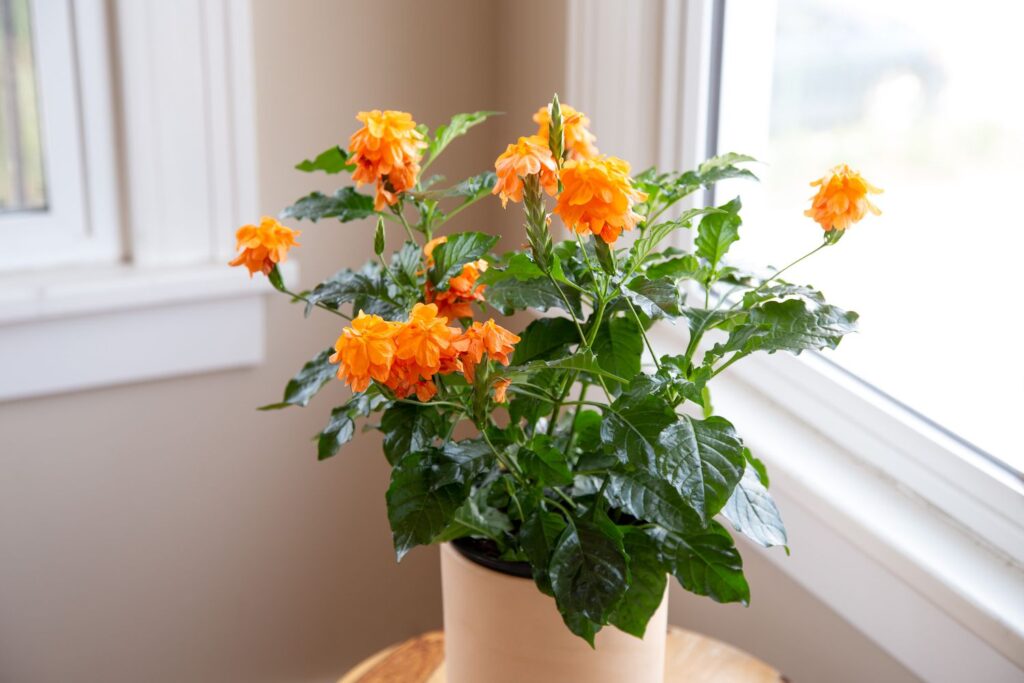
Fertilizing promotes healthy foliage and abundant blooms:
- Use a balanced fertilizer (NPK 10:10:10 or 20:20:20) every 4–6 weeks during the growing season.
- Organic options like compost, cow dung, or liquid seaweed fertilizer can be used to enhance soil fertility.
- Avoid excessive nitrogen, as it encourages leaf growth but reduces flowering.
With regular feeding, Crossandra can produce flowers throughout the year, providing continuous color in your garden or balcony.
6. Pruning for Better Growth and Blooms
Pruning is essential to keep Crossandra compact, bushy, and flowering continuously:
- Remove dead or damaged branches to maintain plant health.
- Pinch back the tips of branches to encourage bushier growth.
- Deadhead spent flowers regularly to redirect energy into new blooms.
Pruning improves air circulation, reduces pest problems, and ensures a dense, flowering shrub.
7. Pest and Disease Management
Although Crossandra is relatively hardy, it can occasionally face pests like aphids, mealybugs, and spider mites. Common diseases include leaf spots and root rot.
- Inspect the plant regularly for pests and treat infestations early.
- Spray with neem oil, insecticidal soap, or mild water sprays to control pests.
- Avoid overwatering to prevent fungal infections.
- Remove and destroy infected leaves to protect the plant.
With preventive care, Crossandra remains healthy and blooms continuously.
8. Seasonal Care
Understanding seasonal care helps maintain vibrant flowers all year:
- Spring: Focus on pruning, fertilizing, and regular watering. This encourages new growth and flower production.
- Summer: Maintain deep watering and feed monthly to support active blooming. Protect from strong winds.
- Autumn: Reduce feeding slightly and maintain consistent watering. Deadhead old flowers.
- Winter: For tropical Crossandra, protect plants from frost by moving potted plants indoors or covering garden plants. Hardy varieties can survive mild winters outdoors.
9. Propagation of Crossandra
Crossandra can be easily propagated from stem cuttings:
- Select a healthy stem, 4–6 inches long, with at least 2–3 nodes.
- Remove the lower leaves and dip the cut end in rooting hormone.
- Plant in a pot with moist, well-draining soil.
- Cover with a plastic bag to maintain humidity and place in a warm, bright location.
- Roots will form within 4–6 weeks, after which the new plant can be transplanted.
Propagation is a simple and cost-effective way to expand your garden with multiple flowering Crossandra plants.
10. Common Mistakes to Avoid
- Insufficient sunlight: Leads to fewer blooms and weak growth.
- Overwatering: Causes root rot and yellowing leaves.
- Neglecting pruning: Results in leggy plants with sparse flowers.
- Excessive nitrogen: Promotes foliage over flowers.
- Ignoring pests and diseases: Early detection prevents serious damage.
By avoiding these mistakes, your Crossandra plant will thrive and bloom beautifully.
Conclusion
Crossandra is a delightful addition to any garden, balcony, or indoor space. With its vibrant, long-lasting flowers, lush green foliage, and low-maintenance nature, it is perfect for gardeners of all experience levels. By planting in the right location, providing proper watering and fertilization, pruning regularly, and protecting against pests and diseases, you can enjoy continuous, stunning blooms throughout the year.
Whether grown in a pot or directly in the garden, Crossandra brings a splash of color and tropical charm to your space. Start today, follow these care tips, and watch your Crossandra plants flourish, creating a beautiful, vibrant display that will impress anyone who visits your garden.