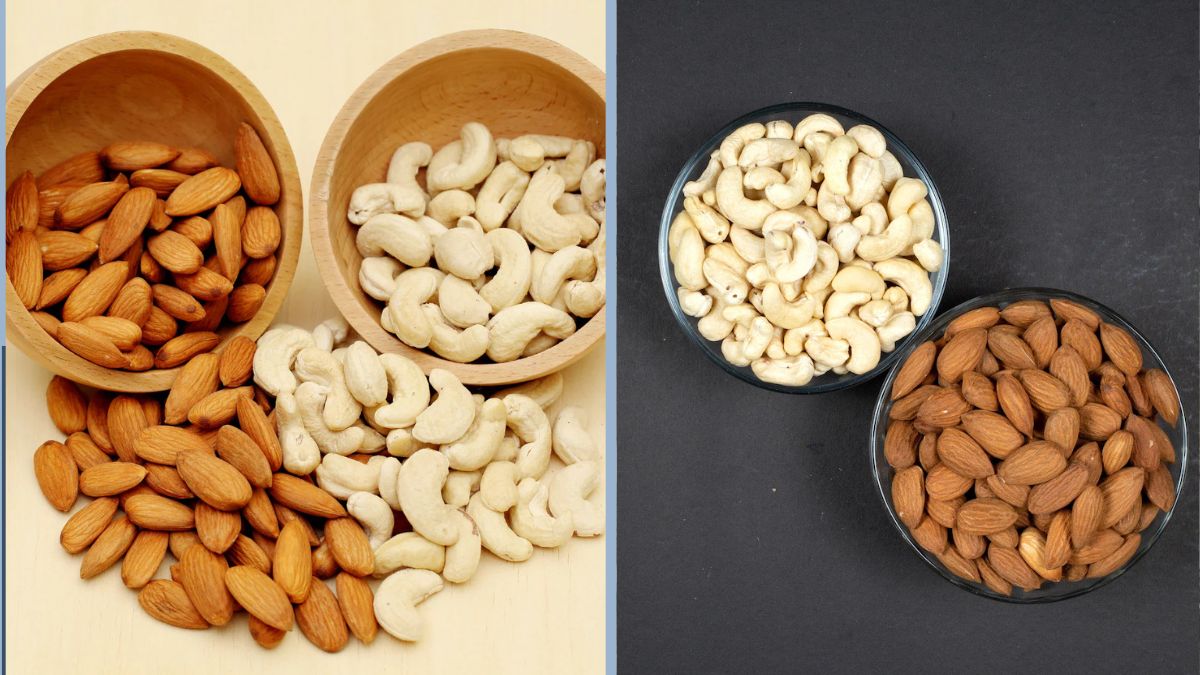
Nuts are often hailed as nature’s snack — crunchy, satisfying, and packed with nutrients. Among the most popular varieties, cashews and almonds stand out for their flavor, versatility, and health benefits. But there’s a long-standing debate in the nutrition world: Are cashews really less healthy than almonds?
Let’s break down the science, exploring nutrition, health benefits, and culinary uses, so you can make an informed choice between these two powerhouse nuts.
Cashews vs. Almonds: Nutritional Overview
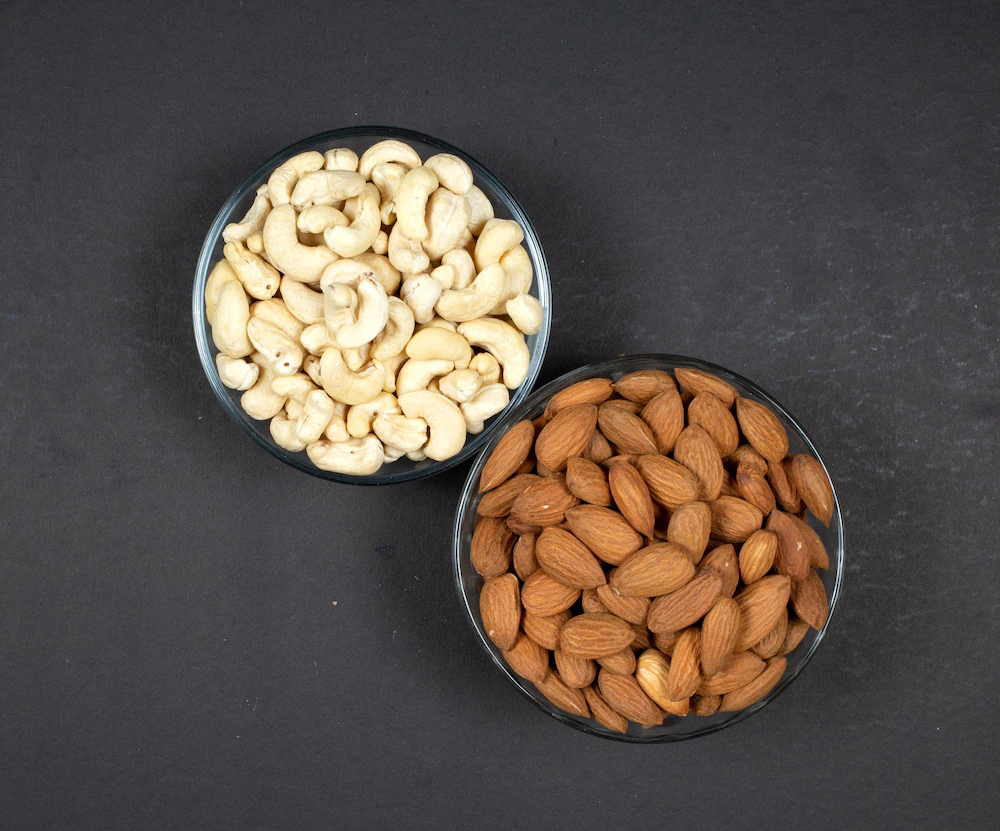
To understand the health debate, we need to start with the numbers. Here’s how 1 ounce (28 grams) of each nut compares:
| Nutrient | Cashews | Almonds |
|---|---|---|
| Calories | 157 | 164 |
| Protein | 5g | 6g |
| Fat | 12g | 14g |
| Saturated Fat | 2.2g | 1.1g |
| Monounsaturated Fat | 7.7g | 9g |
| Polyunsaturated Fat | 2.2g | 3.5g |
| Carbohydrates | 9g | 6g |
| Fiber | 0.9g | 3.5g |
| Sugars | 1.7g | 1.2g |
| Calcium | 10mg | 76mg |
| Magnesium | 82mg | 76mg |
| Iron | 1.9mg | 1mg |
| Vitamin E | 0.3mg | 7.3mg |
Key Takeaways:
- Almonds are higher in fiber and vitamin E.
- Cashews provide slightly more iron and magnesium.
- Both nuts contain healthy monounsaturated fats, but almonds have a slight edge in heart-healthy fats.
Fiber: Almonds Take the Lead
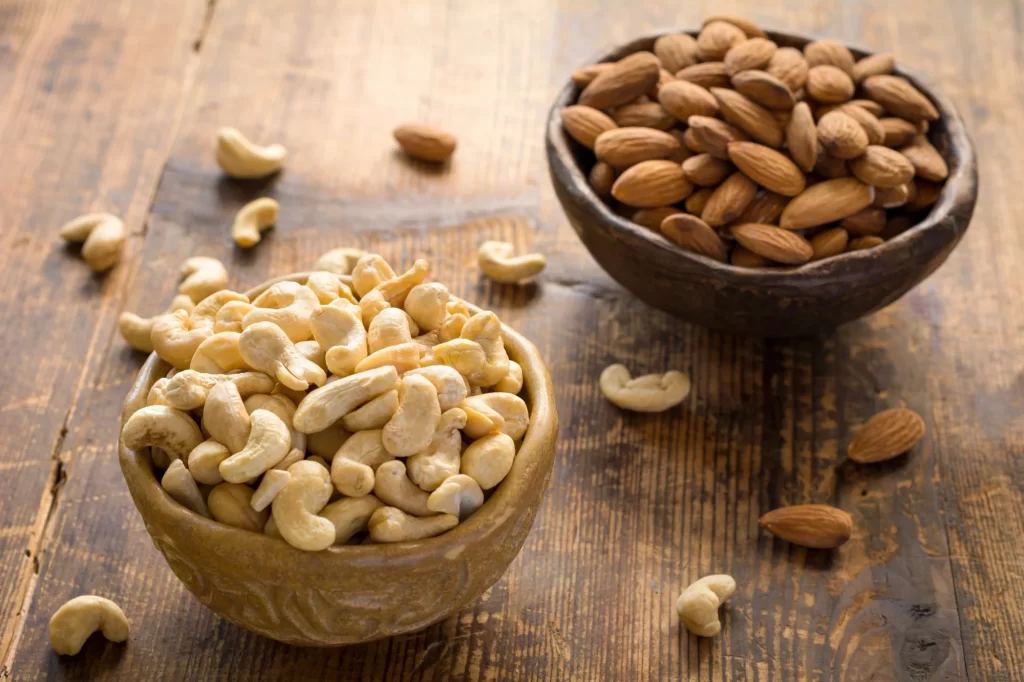
Fiber is essential for digestion, satiety, and heart health. Almonds are a fiber powerhouse, offering nearly four times more fiber per ounce than cashews. This makes almonds particularly beneficial for:
- Digestive health: Supporting regular bowel movements.
- Blood sugar control: Slowing carbohydrate absorption.
- Weight management: Promoting satiety and reducing overeating.
Cashews, while lower in fiber, still offer a modest amount, which contributes to overall nutrient intake but may be less impactful for gut health compared to almonds.
Protein Content: A Close Call
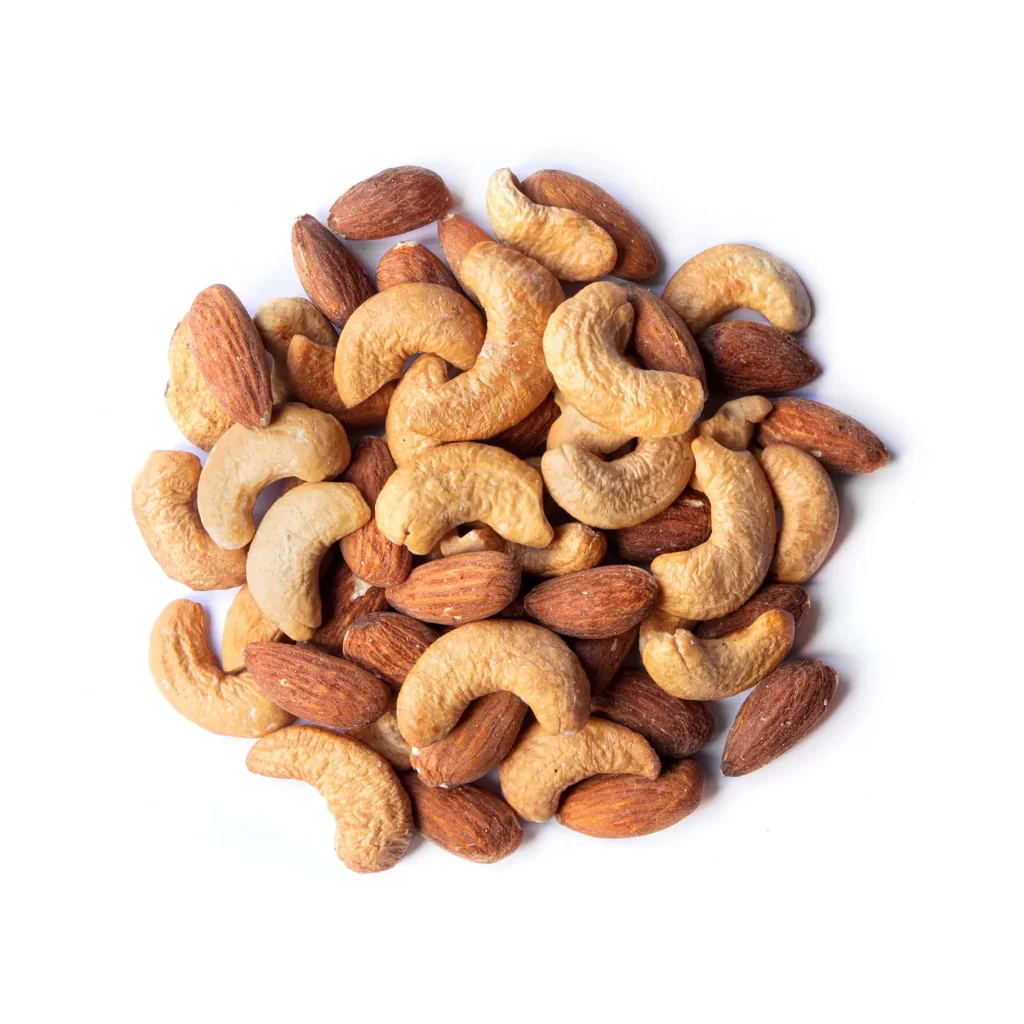
Protein is another factor when comparing cashews and almonds. Almonds contain slightly more protein per ounce (6g vs. 5g), but both are excellent plant-based protein sources.
Protein in nuts contributes to:
- Muscle repair and growth
- Satiety and appetite regulation
- Stable energy levels
For most people, the small difference in protein isn’t significant, making both nuts a healthy choice for protein-rich snacks.
Healthy Fats: Both Contain Heart-Boosting Monounsaturated Fats
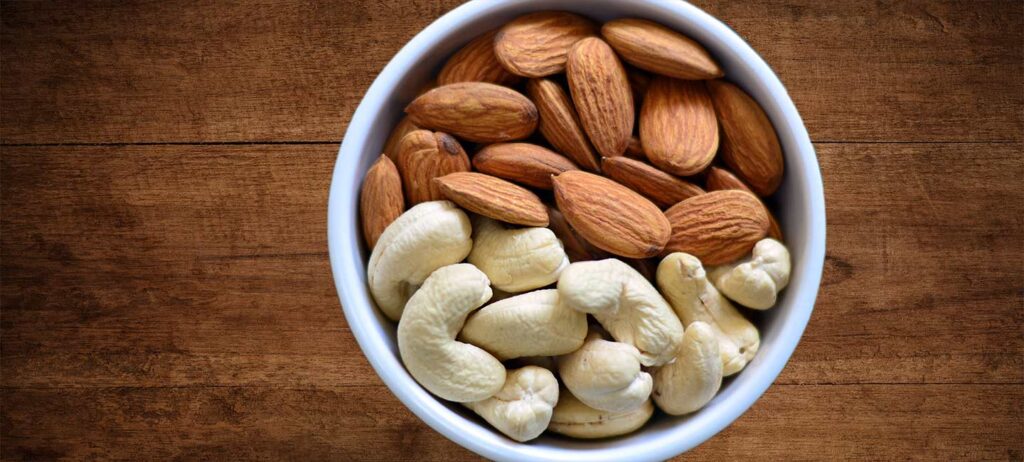
Both cashews and almonds are rich in monounsaturated fats, known to support heart health and reduce inflammation.
- Almonds: 9g monounsaturated fats per ounce
- Cashews: 7.7g monounsaturated fats per ounce
While almonds have slightly more, cashews still offer significant heart-healthy benefits. Both nuts also contain polyunsaturated fats, which support brain function and cell health.
Tip: Avoid salted or heavily roasted varieties to maximize health benefits.
Vitamins and Minerals: Different Strengths
Almonds and cashews provide a spectrum of vitamins and minerals, though their strengths differ:
Almonds
- Vitamin E: 7.3mg per ounce, a powerful antioxidant that protects cells from oxidative stress and supports skin health.
- Calcium: 76mg per ounce, beneficial for bones and teeth.
- Magnesium: 76mg per ounce, supports muscle function and heart health.
Cashews
- Iron: 1.9mg per ounce, helpful for oxygen transport and energy.
- Magnesium: 82mg per ounce, slightly higher than almonds.
- Zinc and Copper: Essential for immune function and antioxidant enzyme activity.
Insight: Cashews are slightly better for minerals like iron and magnesium, while almonds dominate in fiber, calcium, and vitamin E.
Antioxidants and Anti-Inflammatory Compounds
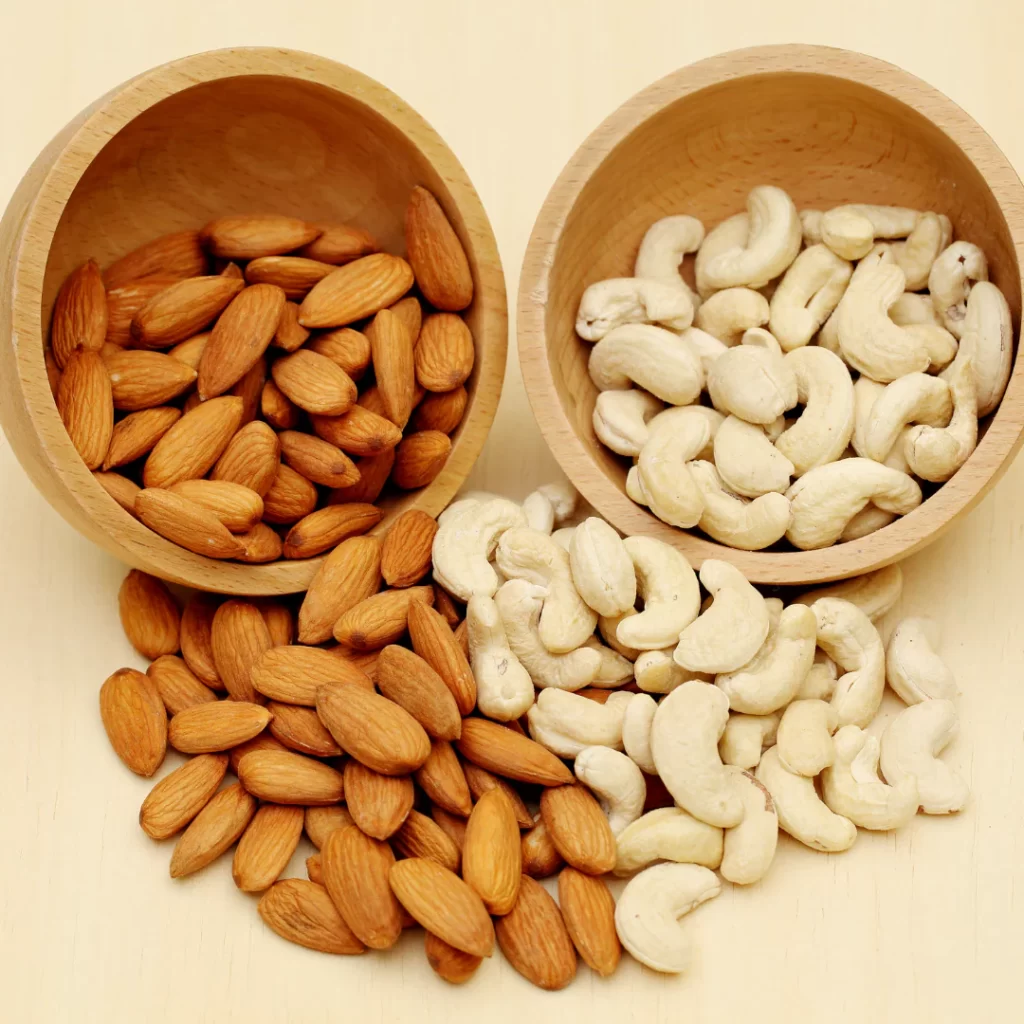
Almonds are particularly rich in antioxidants, mainly concentrated in their brown skin. These antioxidants help reduce oxidative stress, which is linked to chronic diseases like heart disease and cancer.
Cashews also contain antioxidants, but in slightly lower amounts than almonds. However, their content of copper and polyphenols still contributes to overall antioxidant capacity.
Glycemic Impact: Low in Both Nuts
Both cashews and almonds are low in carbohydrates, making them suitable for blood sugar management. Almonds’ higher fiber content may give them a slight advantage in moderating blood sugar spikes after meals.
For people with diabetes or insulin resistance, both nuts are excellent snack choices, especially when paired with protein or fruit.
Weight Management: Can You Snack Smart?
Despite being calorie-dense, nuts have been linked to weight management and even fat loss in research studies. This is due to:
- High satiety: Protein, fat, and fiber promote fullness.
- Thermic effect: Digestion burns calories.
- Incomplete absorption: Not all fat in nuts is fully absorbed during digestion.
Almonds may have a slight edge for weight control due to their higher fiber content, but both cashews and almonds can fit into a healthy diet when eaten in moderation (1–2 ounces per day).
Culinary Uses: Versatility Matters
Both nuts are incredibly versatile, but their textures and flavors make them suited for different applications:
Almonds
- Snack raw or roasted
- Almond butter
- Almond milk
- Baking (flour, cookies, cakes)
- Salads and granola
Cashews
- Creamy texture when blended, perfect for dairy-free sauces and soups
- Cashew butter
- Stir-fries and Asian-inspired dishes
- Baking (cookies, energy bars)
- Snacking raw or roasted
Tip: Soaking cashews before blending enhances creaminess and digestibility.
Potential Drawbacks
Cashews
- Lower in fiber than almonds
- Higher in carbohydrates, which may impact blood sugar if consumed in large amounts
- Often sold roasted and salted, which adds sodium
Almonds
- Higher calorie density, which can be a concern if portion control is ignored
- Skinless or blanched almonds lose some antioxidant benefits
Both nuts are generally safe and healthy, but mindful portion control is key to avoid excessive calorie intake.
Who Should Prioritize Almonds?
- People looking for higher fiber and vitamin E
- Individuals focused on heart health and satiety
- Those who want calcium for bone health
- Anyone seeking snacking and baking versatility
Who Should Prioritize Cashews?
- People needing higher iron and magnesium
- Those who want creamy texture for sauces and soups
- Anyone who enjoys a slightly sweeter, buttery flavor
- Plant-based eaters needing mineral-rich nut options
The Verdict: Are Cashews Less Healthy Than Almonds?
The short answer: not necessarily. While almonds have certain nutritional advantages — especially in fiber, vitamin E, and calcium — cashews bring their own set of benefits, including iron, magnesium, copper, and a creamy texture useful in cooking.
“Both cashews and almonds are nutrient-dense, heart-healthy nuts,” says Lisa Young, PhD, RD, nutritionist and author of Finally Full, Finally Slim. “The healthiest choice depends on your dietary goals and how you plan to use them.”
In essence:
- Almonds are slightly better for fiber, antioxidants, and bone health.
- Cashews are slightly better for iron, magnesium, and culinary versatility.
The healthiest approach is to include a variety of nuts in your diet, rather than focusing on one “superior” option.
Tips for Incorporating Nuts Into Your Diet
- Portion Control: Stick to 1–2 ounces per day to enjoy benefits without excess calories.
- Choose Raw or Dry-Roasted: Avoid heavily salted or sugar-coated varieties.
- Pair with Protein or Fiber: Nuts with fruit, yogurt, or vegetables enhance satiety and blood sugar control.
- Rotate Nuts: Almonds, cashews, walnuts, and pistachios provide a variety of nutrients and flavors.
- Use in Cooking and Baking: Cashews for creamy sauces, almonds for snacks, baking, and granola.
Key Takeaways
- Almonds: High in fiber, vitamin E, calcium, and antioxidants; excellent for satiety and heart health.
- Cashews: Rich in iron, magnesium, copper; ideal for creamy textures and plant-based recipes.
- Both nuts contain healthy monounsaturated fats, protein, and important micronutrients.
- Variety is key: Include both almonds and cashews in your diet to maximize health benefits.
Whether you snack on almonds, blend cashews into sauces, or sprinkle either on salads, these nuts are excellent additions to a balanced diet, supporting heart, bone, and overall health.